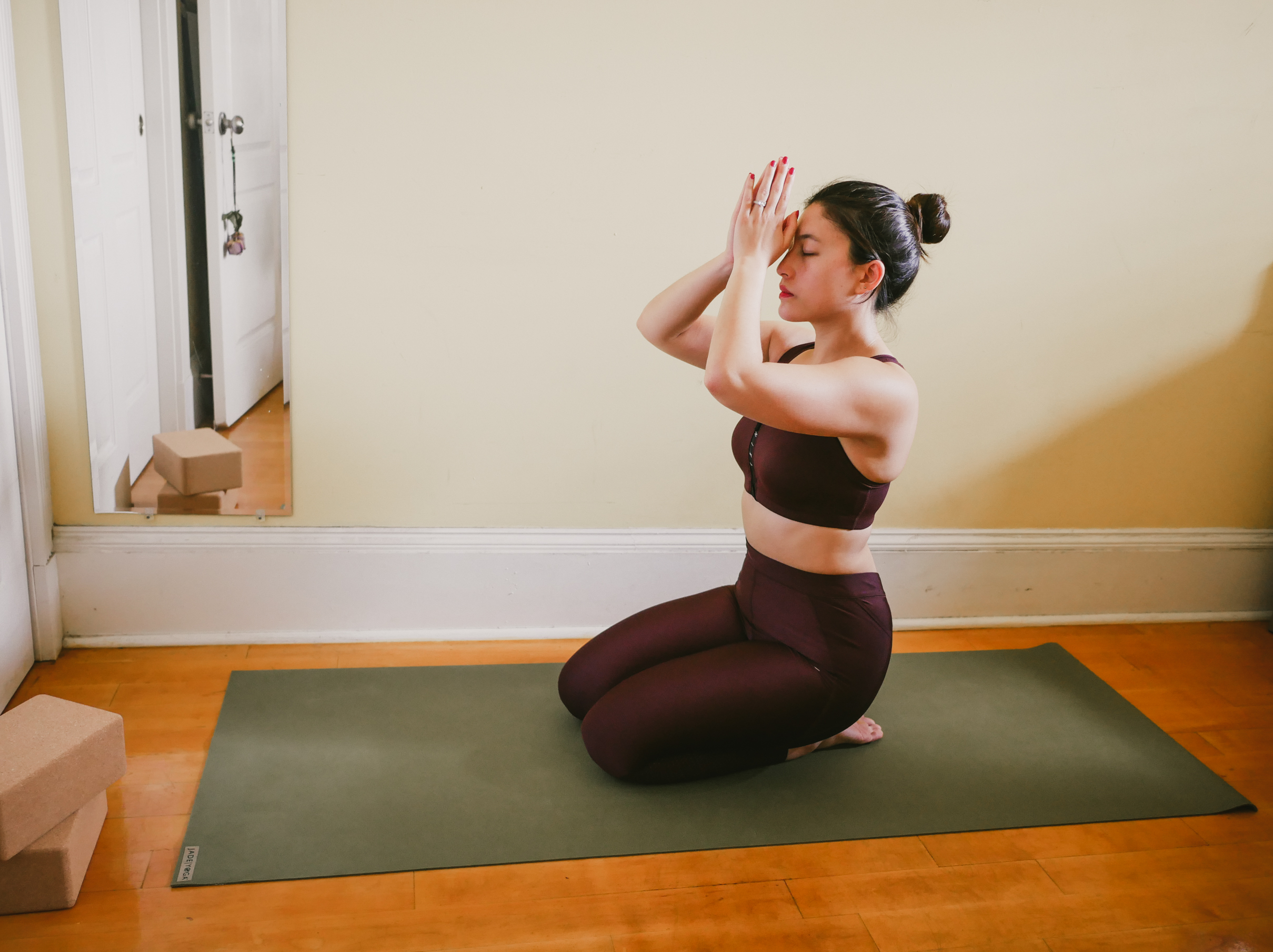
1. Space to practice.
You don't need a dedicated room to practice in or a large area to do yoga. I used to roll out my yoga mat between the door of my apartment and coat closet. It was narrow, but it worked. Yes, having a large space is ideal, but it's not necessary.
As long as you have enough room to stretch without knocking over the TV or stepping on your cat, you'll be okay. The less distractions your space has, the better. It will be easier to clear your mind if your space is clear & clutter-free. The cat will probably stretch out on the mat with you, but that's more of a welcome distraction if you ask me.
2. Set a Time.
Commit to a time and stick to it. One of my favorite yoga teachers, Brett Larkin, says "what gets done in the morning, gets done". I prefer to do yoga before work. You might prefer to practice in the evening.
Find a time that works best for your life. It will be easier to stick with it if you aren't forcing yourself to do yoga at 6AM if you aren't a functioning human that early in the morning. It's also important to pick a length for your practice. Ease yourself into it. Start with 15 minutes. It's great if you can do an hour everyday, but life happens. Don't pressure yourself to start big. If you have more time, you can always do a longer flow. The thing that matters most is consistency.
3. Listen to your Body.
There's discomfort in a pose and then there's pain. Discomfort is a nagging sensation. It's bothersome, but doesn't necessarily hurt. Like if you're holding downdog for 5 breaths, and your shoulders start to feel worn out. You might be shrugging your shoulders up to your ears and squeezing around the neck. If you draw your shoulders down and away from your ears, you might feel less discomfort and more stability in the pose.
Pain, however, is sharp. If you feel, pain, stop. Don't rush out of the pose, move gently. When I was a beginner, going to studio classes really helped me learn to differentiate pain from discomfort. If you can, sprinkle a few studio classes in to your schedule every now and then. Being able to ask a teacher questions about proper form is invaluable. Yoga with Adriene's Foundations of Yoga playlist is a great resource too for learning the basics.
4. Props and a Mat
Even the most advanced yoga students & teachers know the value of including props in your practice. The most common props are blocks, a strap, and a bolster. And no, you don't need to spend a lot of or any money on these. When I started out, I had no extra money to spend. I got the cheapest mat I could find at TJMaxx. For blocks, I used thick books. For a bolster, I just used my pillow. I didn't know about how helpful straps could be back then, but if I did, I would have just used a scarf or a belt.
I know it's tempting to forego using props, but they really help with flexibility and getting into certain poses. If you're a beginner: MODIFY, MODIFY, MODIFY. You'll be able to do all the fancy poses you see on Instagram soon, but in the meantime, work with your body and not against it. Remember, you don't want to injure yourself.
5. Enjoy it.
Your yoga practice is YOU time.
Make it fun. Flow to your favorite music. Practice your favorite poses. Dance on your mat, or scream, or cry. This is your space and your time. Be grateful for this moment. For the time you have every day to reconnect with yourself.


